
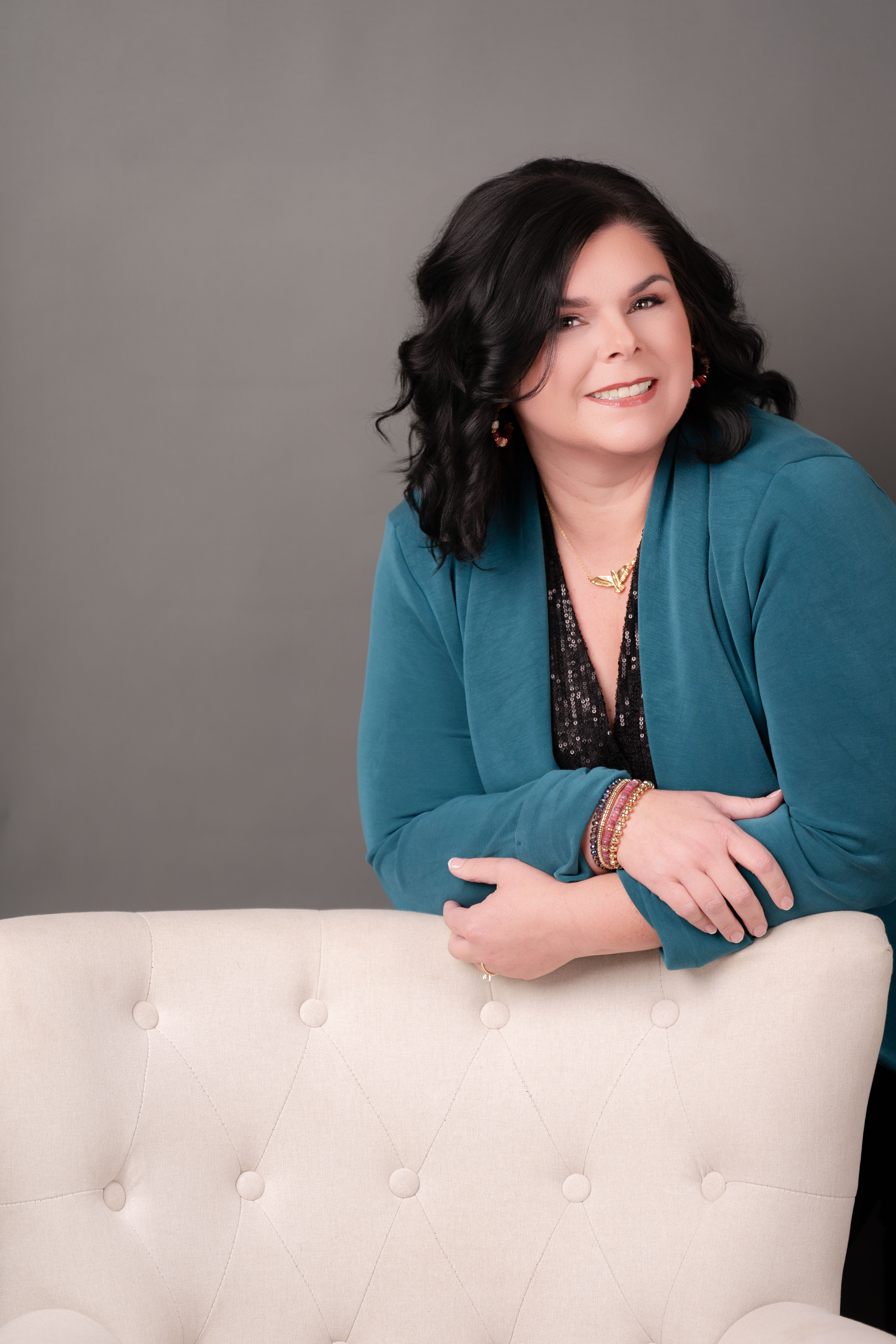
Built on What Matters: Angie and the Quiet Work of a Life Lived with Intention
Updated: Dec 22, 2025
Community Threads - Where Stories Connect Us | Editorial
December 2025 Edition

Pregnant at seventeen, Angie faced a decision that would quietly shape everything that followed. She could continue the family patterns she had known—or she could begin building something new. There were no guarantees either way. Only the understanding that even a small step toward intention can alter the direction of a life.
Angie doesn’t introduce herself by what she does.
“I’m just an everyday person,” she says. “I get up, I go to work, and I take care of my family.”
She says it without hesitation, as though this definition has been tested and held over time. Listening to her, it becomes clear that this isn’t modesty. It’s clarity. Angie knows what matters to her, and she has organized her life around it.
When you arrive at Angie’s home, the first thing you notice is the care.
The driveway is clean. The yard is neat. Two classic cars sit covered outside—projects her husband restores patiently, not rushed. Inside, the house is immaculate. Not staged. Not ornamental. Simply well kept.
It feels less like presentation and more like stewardship.
Angie and her husband live with intention. Things are maintained because they matter—not because they are meant to be seen.
Family has always mattered deeply to Angie. But it has never been simple.
When Angie was thirteen, she learned—accidentally—that the woman who had raised her was not her biological mother. It wasn’t something anyone intended to reveal, and the identity of her biological mother was unknown. What Angie did know was this: the woman who raised her loved her, cared for her, and was her mother in every way that counted.
That truth didn’t change. But it complicated her sense of belonging.
Not long after, the woman who raised her died of cancer.
Angie was still young. And soon, her life would ask even more of her.
Angie and the man who would become her husband had known each other since middle school. They were sweethearts—dating on and off over the years, growing up alongside one another. When Angie found out she was pregnant at seventeen, he was serving in the military, stationed away from home.
The timing was difficult. The future was uncertain.
Around the same time, Angie faced another loss—one that felt quieter, but no less significant. She had been living in the house she inherited from the mother who raised her. Leaving that home meant more than changing addresses. It felt like leaving behind a physical connection to her mother—a final tie to the place where she had been loved and raised.
She was conflicted. Deeply.
In the end, Angie made the decision to leave Louisiana and move to another state with her mother’s sister and her family. They were not biologically related to Angie, but they welcomed her fully. They were loving. Kind. Steady.
It was another example of something Angie would come to understand well: family is not always defined by blood, but by who stays.
“I prayed that God would give me a family,” Angie says. “And He did.”
Angie and her sweetheart married. Over time, they built the life she once prayed for—carefully, intentionally, without shortcuts. She became a wife, a mother to three children, and later a grandmother to four.
Family, for Angie, is not an abstract value. It is a daily practice.
“As long as I have my family,” she says, “I have everything.”
For nearly two decades, Angie has worked at the same medical organization as a dispatcher. It’s a role that rarely draws attention unless something goes wrong. But people rely on her consistency. Systems depend on her judgment. And over time, coworkers have come to trust her—not only professionally, but personally.
“I listen,” she says.
Angie believes in doing things the right way, even when it takes longer.
“I’m not going to sign something just because someone tells me to,” she explains. “I have to make sure it lines up with what I believe.”
It isn’t defiance. It’s integrity. Angie treats her name—and her word—as something worth protecting.
Her faith moves quietly through her days.
Before she starts work, she walks through the building and she prays. Throughout the day, she talks to God in brief, private moments—asking for patience, for calm, for protection for the people around her.
Most people never notice.
That’s intentional.
Angie doesn’t use faith to persuade. She lives it—in boundaries, in generosity, and in how she treats people when no one is watching.
Angie pays attention to small things.
A greeting in the hallway. A smile. Asking someone how they’re really doing. Paying for a stranger’s meal without seeking recognition. Cooking when she feels overwhelmed—and giving the food away once her mind settles.
“Sometimes just saying ‘How are you?’ can change someone’s whole day,” she says. “You never know what people are carrying.”
These moments don’t look remarkable on their own. But repeated over time, they become something else entirely. They become trust. They become safety. They become influence.
“Everybody has a story,” Angie reminds me. “Don’t walk over people. You never know who you’re walking over.”

Listening to Angie talk about family, I found myself reflecting on how often devotion grows out of early absence—out of the lacunae in our lives. The gaps we don’t choose, the spaces left behind by loss or uncertainty, can become places where meaning quietly takes root. Our stories are different, but they touch the same truth: when love feels uncertain early on, some people respond by holding it even more sacred later in life.
Angie didn’t inherit certainty. She built it—through consistency, faith, and care.
When Angie talks about legacy, she doesn’t mention accomplishments. She hopes people will remember her as kind. As encouraging. As someone who helped when she could and listened when it mattered.
She imagines retirement not as retreat, but as another season of service—volunteering, guiding, continuing to show up.
Her definition of success has changed over time. Once, it was survival. Now, it is stewardship.
Community Threads exists to remind us that legacy is often built quietly. Through ordinary faithfulness, intentional care, and the courage to choose meaning over circumstance, people transform what they were given into something life-giving. These are the stories that stay with us—not because they are loud, but because they are true. This is how lives become positively indelible.
Angie did not deny her past. She did not let it harden her. She upcycled it—turning uncertainty into devotion, loss into loyalty, and absence into care.
This is how ordinary lives leave a lasting mark.
Quietly.
Faithfully.
Indelibly.
If stories like Angie’s resonate with you, we invite you to stay connected.
Community Threads is part of Positively Indelible, whose mission is to help people upcycle their lived experiences into meaning, resilience, and lasting legacy.
Visit our home page to learn more about Positively Indelible and subscribe to receive future stories.
Author’s Note:
This story is part of Community Threads, an editorial series dedicated to thoughtful human-interest storytelling. These stories are shared with permission and intention, honoring privacy while preserving meaning. Names and identifying details are included thoughtfully, with dignity as the guiding principle.


Comments